
A Commonwealth-born British army veteran, who served for more than ten years in the military including tours of Afghanistan and Iraq, has been told he must pay more than £27,000 for an NHS hospital bill after an emergency operation to remove a brain tumour.
Taitusi Ratucaucau, 49, was classed by hospital staff as an overseas patient and therefore entitled to free NHS care. Mr Ratucaucau joined the British army in 2001 and has been living in the United Kingdom continuously since being discharged from the military in 2011.
The former military man is living in the United Kingdom with his wife and three daughters, and paying tax and national insurance.
Mr Ratucaucau, who originally from Fiji, is recovering in a London hospital after major brain surgery on 30 April.
Despite being told to take it easy and focus on his physical rehabilitation Mr Ratucaucau said he was spending most of his time worrying about how he would meet the demand for payment.
The bill is increasing by around £1,500 for every day he remains an inpatient and given he has no savings to pay the bill and is the breadwinner in his family but too unwell to work the bills have become unaffordable.
Ratucaucau is one of a group of Commonwealth-born military veterans who launched legal action against the Home Office and the Ministry of Defence earlier this year, over an alleged systemic failure to advise them of the need to apply for settlement in the UK on discharge and for failing to assist them with complex, expensive immigration rules.

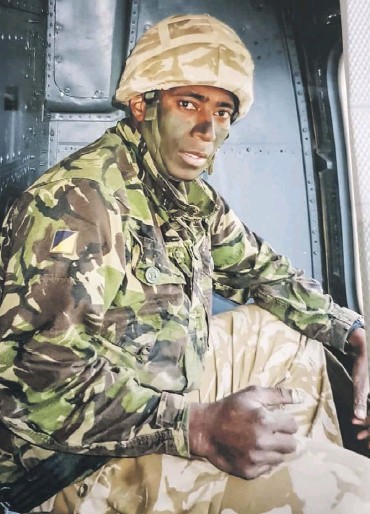
This has left many people categorised as illegal immigrants, unable to access free NHS treatment, facing unemployment and homelessness and fearing deportation. They are unable to regularise their status owing to the cost and complexity of the immigration system.
On discharge from the British army, Ratucaucau, who also served in Belize and the Falkland Islands, was given an “exemplary” conduct record and described as a “very capable, loyal and trustworthy individual” with an “impeccable work ethic”.
Mr Ratucaucau said speaking on the issue: “I gave up years of my life to fight for this country. We can’t believe that the Home Office could be like this. I feel sad and angry.”
“Where can I get money to pay for this treatment when I’m in hospital?” he asked
In a witness statement given to his lawyer, Vinita Templeton of Duncan Lewis, before he became ill, he said: “As I had served for 10 years, I expected that I would be able to remain in the UK after being discharged … I feel that the position I have had to endure since being discharged from the army is very unfair. The army let me down badly by not giving me enough notice about steps that needed to be taken in order for me and my family to remain in the UK, and also about the cost of the Home Office applications. I feel that the fees that the Home Office charge foreign national veterans for the right to remain is extremely unfair, considering the committed service we have given to this country.”
A government spokesperson said it would not comment on the individual case because of ongoing legal proceedings, but added: “The service of all members of the armed forces, including Commonwealth nationals, is highly valued.”
[give_form id=”1772″ show_title=”false” show_goal=”false” show_content=”below” display_style=”modal”]

Editor-in-Chief | Carl D. Pearson has been involved in British politics and media from an early age, with the key knowledge of what it takes to run a news organisation for the 21st century. Mr Pearson, as Editor-in-chief, is responsible for supervising the daily tasks of publishing media and content to UNN’s website and various platforms.
[sibwp_form id=4]
