
Seven former British foreign secretaries have urged Prime Minister Boris Johnson to form a global alliance to coordinate the response to the China-Hong Kong crisis.
China is facing huge criticism over a planned security law for Hong Kong which would make it a crime to undermine Beijing’s authority, the UK’s Secretary of State for Foreign Affairs Dominic Raab has urged China to consider their course of action wisely and respect the Sino-British Joint Declaration treaty.
Foreign Secretary Raab said that Britain would not turn a blind eye to the events in Hong Kong and threatened the Chinese government that if they do go down the route, a path for British citizenship will be made more easily obtainable to Hong Kong citizens.
Hong Kong was handed back to China from British control in 1997 but under a unique agreement that dictates that Hong Kong will govern itself, this agreement is set to expire in 2047.
At midnight on June 30/July 1, 1997, the British crown colony of Hong Kong officially reverted to Chinese sovereignty, ending 156 years of British rule. After a formal handover ceremony on July 1, the colony became the Hong Kong special administrative region (HKSAR) of the People’s Republic of China.
The former British colony has enjoyed some freedoms not seen in mainland China, these are set out in a mini-constitution called the Basic Law.
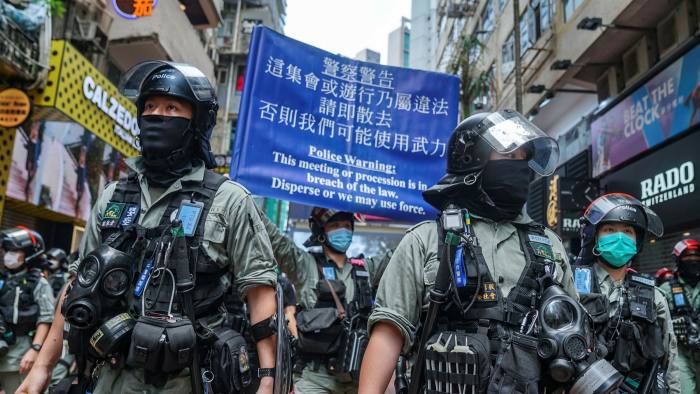
There are major fears the proposed law, which has sparked a mass of anti-mainland protests in Hong Kong, could compromise some of the freedoms guaranteed by the Basic Law.

In their letter to the Prime Minister, the cross-party group of former cabinet ministers says the UK government must be seen to lead the international response, as many countries take their cue from Britain over its former colony.
Jeremy Hunt, David Miliband, Jack Straw, William Hague, Malcolm Rifkind, David Owen and Margaret Beckett all expressed their concern at what they call China’s “flagrant breach” of Sino-British agreements by imposing tough national security laws on Hong Kong.
They urged Mr Johnson to set up an “international contact group” of allies to coordinate any joint action, similar to that set up in 1994 to try to end the conflict in the former Yugoslavia.
A Downing Street spokesman said that HM’s government is already playing a leading role with international partners in urging China to rethink its position.
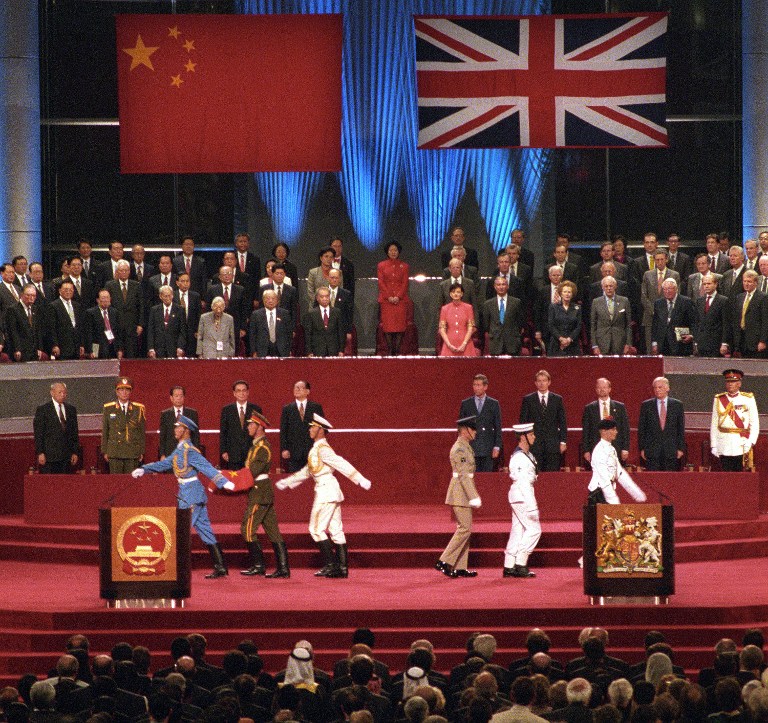
Mr Raab said the new security legislation “very clearly violates” the autonomy that is guaranteed under Chinese law as well as that in the 1997 Sino-British Joint Declaration treaty.
He confirmed the UK will allow those who hold British National (Overseas) passports to come to the UK and apply to study and work for an extendable 12-month period, this will in turn “provide a path to citizenship”, he said in a video released on social media.
Mr Raab said up to three million people registered as a British national (overseas) in Hong Kong could be eligible for UK citizenship if China presses ahead with the law.
While all this is happening, the chairman of Commons foreign affairs committee, Tom Tugendhat, said the government must realise that China has a “very, very authoritarian system of government” and should rethink the partnership between the United Kingdom and the People’s Republic of China.
[give_form id=”1772″ show_title=”false” show_goal=”false” show_content=”below” display_style=”modal”]

Editor-in-Chief | Carl D. Pearson has been involved in British politics and media from an early age, with the key knowledge of what it takes to run a news organisation for the 21st century. Mr Pearson, as Editor-in-chief, is responsible for supervising the daily tasks of publishing media and content to UNN’s website and various platforms.
[sibwp_form id=4]
