
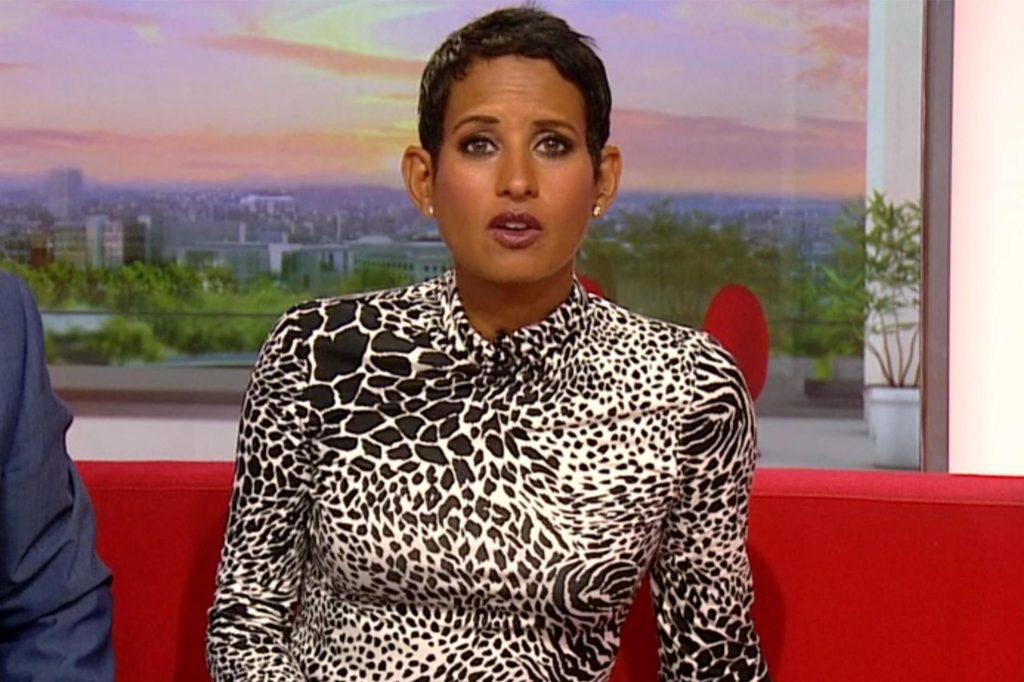
BBC Breakfast presenter Naga Munchetty has revelled her opinions of the TV licence fee used to fund the BBC in the United Kingdom, she believes the content the broadcaster offers justifies the fee.
The BBC’s license fee continues to become increasingly controversial in recent months as people question the fairness of forcing the UK public to pay to watch live TV.
Today, the TV licence costs £157.50 a year and £53 for black and white TV sets, in some cases, you may be entitled to a reduced fee TV Licence. You can pay for your licence all in one go or spread the cost.
The BBC provides public service broadcasting and is funded by the fee that has to be paid by anyone who watches live TV, to watch BBC iPlayer, the viewer must also have the TV licence.
Naga spoke out on the controversial fee while being interviewed alongside Breakfast’s assistant editor Mark Grannell, she said: “There’s been noise about the licence fee for decades,
“But at Breakfast, we’re not ratings-driven, we’re not there to garner attention on social media.”
She continued: “We’re there to provide a service and make sure people are informed, educated and entertained.

“I think a licence is worth that,”
Her comments came as her boss, Mark Grannell, said he would have to sit out a debate on the fee.
He told Radio Times: “It’s not for me to make this case.
“All I’ll say is that coverage of coronavirus is a prime example of what’s so good about the BBC, right across the board.”
Adding to the controversy of the licence fee, at the end of last year, the broadcaster announced pensioners would be forced to pay except in households where someone aged over 75 receives pension credit.
These plans were postponed due to the coronavirus pandemic but the new arrangement comes into effect from August 1.
Speaking out on the BBC’s decision, Oliver Dowden said: “I very much regret the decision that the BBC has taken. We gave the settlement to the BBC back in 2015.
“They said that it was a good settlement, and I regret that they couldn’t find efficiency savings in order to avoid having to impose the licence fee on the over-75 in the way that they have set out.
“I feel let down that the BBC haven’t funded this. I’m sure people up and down the country will feel let down that they haven’t funded it.
“Our manifesto said we thought that they should fund it, I’ve made that position clear to the BBC and I’ve not changed my mind on that.”
[give_form id=”1772″ show_title=”false” show_goal=”false” show_content=”below” display_style=”modal”]

Editor-in-Chief | Carl D. Pearson has been involved in British politics and media from an early age, with the key knowledge of what it takes to run a news organisation for the 21st century. Mr Pearson, as Editor-in-chief, is responsible for supervising the daily tasks of publishing media and content to UNN’s website and various platforms.
[sibwp_form id=4]
