
In an article written for Ickonic, UNN’s Jacqui Deevoy reveals the true horror of elective adult male circumcision.
‘Back in September 2019, I pitched a story to several national newspapers on the subject of adult male circumcision, I came up with the idea after being approached by a man who’d decided to have the operation in his thirties with disastrous results.
After looking into it further, talking to a woman whose 21-year-old son had committed suicide after a botched operation, and meeting and talking with many other men who’d been affected detrimentally by having the procedure done in adulthood, I decided this was an important issue that I’d never seen addressed and that the stories of these traumatised people needed to be told.
Here’s my original pitch:
“I’m working on a story about adult male circumcision and the trauma that some men suffer after the operation due to not being warned about the possible side effects and repercussions. Also talking to some of their wives about how the circumcision has affected their relationships.
I started researching this after a young man killed himself after being circumcised. He didn’t share his suffering with anyone but left all the details of how he felt in a suicide note to his mother.

I’ve since discussed it with several men who had the procedure for one reason or another in adulthood and whose lives haven’t been the same since.
Would you be interested in this?”
After touting the idea about, I eventually got a response from a daily paper. This:
“I think it’s a great issue. But our boss is a bit squeamish when it comes to main / news feats section so I think it’s a no.”
That surprised me. Squeamish? What did the big editor’s squeamishness have to do with whether an important article should be published or not? Surely, a lot of news articles are upsetting but they’re still published. Unperturbed, however, I continued to pitch…
Shortly after, another editor used the same word – “squeamish” – when explaining why his boss wouldn’t run the story.
I mulled this over. At one point I wondered whether my article was being viewed as anti-circumcision and therefore anti the cultures that practised it. No editor said as much but it didn’t stop me thinking that this could be the case.
Next stop, the Daily Express. Not interested. They were quite clear about that!
Whilst chasing the papers, I also pitched to women’s magazines.
I managed to get an article published in a women’s magazines: a heart-wrenching interview with the woman who lost her son. To understand what she and her son must have gone through, I attended a meeting organised by a charity called 15 Square (more about them in the article below) and talked to many men who’d been traumatised by their experiences of circumcision. Many had had their lives ruined by it and almost all had considered suicide.
Many had no one to talk to before they found the group and several said finding other people who’d suffered because of circumcision had actually saved them.
All agreed that the topic was taboo and very few of them had seen articles in the mainstream media on the subject. That made me all the more determined to persevere.
At this stage, however, it seemed no publication was interested in hearing anything from the actual victims’ points of view.
Eventually, I persuaded the Daily Mail to agree to run it. After much to-ing and fro-ing (first they didn’t want the main case study – ‘Paul’ – to be anonymous, then they said it was OK that he was) and much editing, the piece was finally finished. This was in October 2019. By December, it still hadn’t been published and the editor had stopped responding to my emails. So I took it to the Telegraph.
Another strange response, when the editor I’d pitched to said she didn’t have time to read the whole article but “if it’s all about circumcision, that’s not one for us I’m afraid.”
In January 2020, I approached the Guardian. I was told they’d recently published a piece on circumcision and was sent a link. It was all about the positives of having an elective circumcision and was light in tone (https://www.theguardian.com/lifeandstyle/2019/sep/01/i-had-to-adjust-to-life-with-a-different-penis-the-pain-and-positives-of-an-elective-circumcision) and, although it briefly mentioned a guy who’d suffered PTSD after the operation, it ended by saying how much positive feedback the writer had had since having his penis remodelled.
That’s when I had to give up. There’s only so much time a freelance journalist can spend in one article. I shelved it. If you’d like to read the story no one wanted, here it is:
The World Health Organisation states that 8% of British males are circumcised. In the US, it’s 80%. Neonatal circumcision is seen as a simple procedure, but many men who are circumcised in adulthood suffer extreme physical and psychological repercussions, with some becoming suicidal.
Paul*, a factory supervisor and keen footballer from Birmingham, was in his early thirties when he was circumcised as a way of dealing with phimosis (a too-tight foreskin). He claims that no doctor at the hospital spoke to him prior to the surgery.
On the day of the operation, he says he filled in a form at reception and that the receptionist asked him if he had someone to drive him home after the operation. “I replied that I’d be driving myself home. The receptionist informed me that this wouldn’t be possible after a general anaesthetic and that I’d need to get someone to pick me up.”
At this point, Paul said he heard a voice in his head, telling him to leave. “It was so clear,” he says. “It was telling me to get out and to not have the operation. I should have listened to it.”
He went ahead with the operation anyway.
He was told that the consultant he’d seen three weeks previously would be doing the surgery, but he didn’t see him at all. A nurse administered the general anaesthetic and when he woke up, the surgeon had gone. He called his ex partner and she drove him home.
That night, Paul woke up in agony. “I turned on the bedside lamp and looked down at my penis,” he says. “I had an erection and the recently put-in stitches were starting to burst apart. There was blood all over the sheets. Why hadn’t I been warned about this? I waited for the erection and bleeding to subside. Then, after taking some painkillers, I went back to sleep.”
A week later, the stitches were still sore so Paul went to see his GP. The stitches had got infected. “I was so worried,” he remembers. “I told my doctor that I thought my penis was going to drop off or need to be amputated. The doctor laughed and said what was happening was ‘normal’. I was given antibiotics and sent home. I felt relieved. I trusted my GP. I trusted all the men in white coats back then.”
Back in his bedroom, Paul checked the stitches. “That’s when I noticed a small flap of skin near where my frenulum (the small band of skin – the bit that some refer to as the “banjo string”) had once been. What the hell was that doing there? My whole genital area looked alien. The normal penile skin had been replaced with stretched and stitched skin from my scrotum. Because of this, my scrotum was much higher and tighter than it had been before and, to my horror, I now had pubic hair from the scrotal area along the full length of my penis! I felt sick, angry and betrayed.”
For the next few months, Paul tried to pretend everything was fine. He thought he should “test it out – to see if it still worked”, but he kept putting it off. “I was terrified it wouldn’t work,” Paul admits. “My fears weren’t unfounded… When I tried to use it – solo – everything felt different. Even my orgasm was different, and not in a good way. And the sensitivity had changed – it felt almost numb. I wasn’t expecting that at all.”
According to a study published in the British Journal of Urology International, circumcised penises can be up to 75% less sensitive than uncircumcised ones. Dan Bolinger, the author of the study and director of the International Coalition For Gender Integrity, says this loss of sensitivity is often caused by the severing of the perineal nerve, which is located on the underside of the penis. He says that nerve is responsible for the majority of sexual sensory input. When the operation is performed in adulthood, the man will really notice the difference.
Paul was so unhappy about what had happened to him that he decided to find the consultant. At the hospital, although the doctor was there, Paul was told that he was too busy to see him. “He was hiding from me,” Paul claims. “And I wasn’t surprised. He knew he’d botched the operation. He was hiding like the coward he was.”
Another doctor at the hospital spoke to Paul and told him that all Paul’s problems were psychological. “I mentioned the hair on my penis. The doctor said that was nothing to do with them. I asked about the flap of skin and he told me I’d just have to live with it. He said it couldn’t be removed as it would bleed too much.”
Paul left the hospital angry and confused. “How could they deny responsibility? The only reason I had all these problems was because of the circumcision, yet I was being told that the doctors had nothing to do with it!”
He felt he was getting nowhere with doctors and consulted an electrologist instead. He had several rounds of expensive electrolysis. “That was really painful too – insult to injury – but at least the hair had gone.”
Despite the hair removal, he was still concerned and upset by the appearance of his member. “It looked all wrong,” he says, “with a dark stripe running up where soft paler skin had been and feeling rough instead of smooth. Having the glans constantly exposed was uncomfortable too and felt sore where it rubbed on my clothes.”
Up until the circumcision and in spite of the phimosis, Paul had been dating regularly, meeting women mainly through Tinder but, after the op, he believed his dating days had come to an end. “After the circumcision, my whole life changed,” Paul recounts. “I stopped going out, spent every day at work and every night in front of the TV, gave up playing football (I was too worried about the possibility of being seen naked and ridiculed in the post-match shower), all thoughts of women and sex a distant memory. I felt like a freak, convinced I’d never be able to have sex again.”
A few years passed. And Paul decided to get back on the dating scene. But it didn’t go well. “The first time I tried to have sex with someone was a disaster,” he recalls. “The woman said my penis looked ‘weird’ and that made it impossible for me to get an erection. She accused me of not fancying her, then left.”
Throughout this period, Paul confided in no one. His family lived abroad and he couldn’t talk to his friends about it. “It was too personal,” he states. “I’m quite a reserved person and, anyway, men just don’t talk about that kind of thing. So I just bottled up all my sadness and kept quiet.”
Soon, Paul sank into a deep depression. “I was working as a factory supervisor at the time,” he says. “I’d get up every morning, go to work, come home, watch TV, drink beer (lots of it – sometimes up to ten pints), then go to bed. I was like a zombie. Some mornings I’d still be drunk driving to work.”
One morning, he was stopped by the police, breathalysed and ended up in court. He was given a three-year driving ban. Shortly afterwards, his boss noticed he was drunk at work and he lost his job.
“I was at an all-time low,” he sighs. “My life wasn’t worth living – I had no friends, no girlfriend, no sex life, no car and no job. I considered killing myself.”
One evening, he swallowed a handful of pills but threw them up when an image of his daughter entered his mind. “She was only eight,” he says. “I couldn’t abandon her like that. I was in limbo: not wanting to live and not being able to die.”
Sadly, although suicide following circumcision is rare, it does happen, and men having suicidal feelings and overwhelming depression after the operation, is very common.
The charity 15 Square (named after the approximate size in inches of the average amount of tissue an adult man loses to circumcision) was set up 25 years ago to help men who have not only been physically damaged by circumcision but psychologically too. The charity also offers support and advice to uncircumcised men.
Chief officer David Smith says: “Circumcision is promoted as an effective, safe procedure with very few, if any, after-effects or complications. In many cases, however, the reality is very different. It’s not just physical complications that are reported by circumcised men. Many tell us that they have been emotionally and psychologically scarred too.”
Over the years, Paul got used to his new penis, but never got to like it. He says he had a few more sexual encounters, which didn’t involve women being horrified, but that his confidence and self-esteem were still low. He then went on to have an 18-month relationship that ended when they both realised they wanted different things in life.
These days, Paul says he’s never as happy as he feels he should or could be. “I feel as if something is holding me back, stopping me from experiencing and enjoying life to its fullest,” he says. “I often feel numb emotionally. I’m still angry about what happened. My anger is close to the surface at all times and I feel scared that, one day, it will all come bursting out.”
His main gripe, however, is that he wasn’t fully informed about the potential pitfalls of having a circumcision. “If I’d been told what it entailed, I wouldn’t have had it done,” he claims. “But I wasn’t told.”
Trevor J. Dorkin, Consultant Urological Surgeon at The Freeman Hospital, Newcastle says that, although circumcision is often classified as a minor procedure, it is an operation, and like any operation there are definite risks and complications. Because of this, he insists that it’s very important that the patient is fully counselled beforehand. “This should include a discussion of possible foreskin-preserving options,” he says.
Paul is also furious that this major, life-altering operation is described as a ‘minor procedure’. “It’s clearly not a minor procedure,” he says angrily. “It’s a major operation with serious risks – physical and psychological – attached to it. But no one is ever told that.
Trevor Dorkin addresses this when he says: “The patient should have realistic expectations. I always tell men that the penis will look like a ‘dog’s dinner’ for the first few days afterwards, due to swelling and distorted anatomy, and that it can take up to three months for full healing. For most men, the operation is very successful in dealing with what can be distressing symptoms (e.g. splitting/tearing of the foreskin, difficulty passing urine, recurrent foreskin infections, pain during sex) – if this were not the case, then the operation would never be performed.” He adds, however, that complications can and do occur. “For that individual, the sequelae of circumcision can be damaging to their physical and mental well-being. It is important that help and support is available to these men.”
Last and not least, Paul is angry about the way he was dismissed by the doctors. “None of them wanted to know,” he says. “And the man who disfigured me – the surgeon – is now nowhere to be found. Turns out he retired early, shortly after I went looking for him. I’d guess he was in his early 40s at the time.”
At one point, death really did seem to be the only way out for Paul. “I felt as if I’d fallen into a big, dark hole where I would be trapped forever. I think if it hadn’t have been for my daughter, I would have ended it all. I’m glad I didn’t but can never totally forget the way I felt and that ghost – the ghost of my traumatised past self – will never go away.”
Contact 15 Square:
T: 01785 814 044
* Name changed

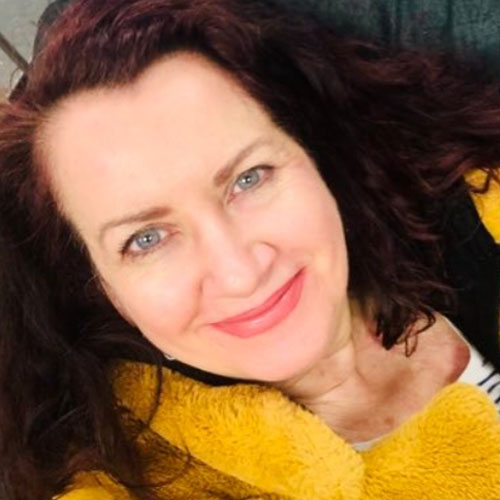
Jacqui Deevoy has been a full time freelance journalist for more than three decades. Over the last few years, she’s lost faith in the MSM and now prefers to work for news outlets that deal in truth, not lies.
In 2021, she launched a personal investigation into euthanasia in the NHS and this resulted in her producing the shocking documentary ‘A Good Death?’ She is currently crowdfunding for a second film – ‘Playing God’ – due for release soon.
She produces and presents the UNN Friday night show – a sometimes serious but often irreverent chat-fest with an array of fascinating guests talking on a wide range of subjects. She’s also one of UNN’s lead reporters.
Follow Jacqui on Twitter @JacquiDeevoy1
