
A practising lawyer from the south of England narrowly escaped death in hospital on two separate occasions after being treated for Covid under hospital guidelines. He was also pushed to try an experimental new drug he didn’t want. He’s not the only person to have gone through this – medical researcher Stuart Wilkie and funeral director John O’Looney suffered similar experiences in different hospitals around the same time – but many aren’t alive today to tell their stories…
As told to Jacqui Deevoy
“Back in 2021, I was admitted to hospital three times with acute asthma and pneumonia. The medics were desperate to classify me as a Covid patient throughout, with daily tests and consultants constantly talking about Covid. They tested me many times and all all bar one of my results came back negative. The one time I tested positive, I asked them to do it again and got a negative result, but that was still enough for me to end up on a Covid ward. The hospital staff considered this a precautionary measure and that I was a “higher risk” because I was unvaccinated.
I didn’t have Covid but my allergy markers were through the roof and this had caused big problems with inflammation and mucus, hence the pneumonia and asthma.
On my second admission (in November 2021), while still in A&E/critical care, the doctor looking after me said that my symptoms were consistent with Covid. I had a test and it came back negative. He prescribed morphine and told me it would help with my breathing. I went along with it – to be honest, at the time, I thought “I’ve had morphine once before and happy days if I can have some to relax.” I didn’t know at the time that it can depress the respiratory system. So I agreed to have it.
After giving me the first dose of morphine, the doctor said that under their new treatment protocol I could have as much as I wanted, as long as it wasn’t too frequent. He told me to just ask if I want more. I felt reassured hearing that. If only I knew what was to come…

Soon after this conversation, I was transferred up to a ward, put into bed and settled down for the night. Not long after this, my breathing got really difficult and, not knowing better, I asked for more morphine. They gave me another dose.
About 30 minutes later, I realised I was in real trouble. I could feel my breathing getting slower and everything getting darker and heavier. It was the most horrible sensation: I was certain I was going to die. I remember thinking to myself “you’ve got to hit the panic button”, which took all my strength to do. When the nurse came, I pointed to the oxygen mask. She got me sitting up, put the mask on and this helped stabilise me. I am certain I would have died had I not found that strength at that moment and now, with hindsight, I know that the worst thing you can give someone with a respiratory illness is morphine.
I was discharged after a week but the symptoms soon returned and I was ambulanced in again in the run up to Christmas 2021. I was put on a Covid ward – again, as a “precautionary measure” – after a barrage of blood tests. It was established that I had a major allergy but they didn’t know to what.
On the second day, a registrar came to see me with a junior doctor. He said they had a new treatment protocol and would like me to try some medication. I asked about it, they said again it was new. I can’t remember the name of it. It wasn’t Midazolam or Remdesivir – it was something I’d never heard of.
I didn’t like the registrar at all: everything was Covid to him. Prior to this meeting, the A & E consultant had said my symptoms weren’t consistent with Covid and the big concern to him was why I had such a major allergy problem. When I saw the registrar, however, he said that although my symptoms were not consistent with Covid, they would nevertheless treat it as Covid! That made no sense to me at all.
I went through my medical history and explained that I clearly had an allergy problem but, no, to him it was still Covid. I suggested having another PCR test and he reluctantly agreed, remaining adamant all the while that I had Covid. He then added that my body would not be producing antibodies because I was unvaxxed so I must go on this new treatment, otherwise I would be at serious risk. I said that he wasn’t making sense but he wasn’t listening. He seemed to be pushing me towards what sounded like an experimental treatment. I pressed for details but he wouldn’t tell me anything.
Later, the junior doctor provided me with some information. The data sheet I was given confirmed it WAS an experimental treatment, so I had lot to say about informed consent at that point. As I read further into the data sheet, under ‘contraindications’, it said that the drug was not to be given to patients with allergy symptoms because of the risk of anaphylaxis, which would have been potentially fatal to someone like me with allergy issues. I was so angry when I read that.
I complained about the registrar whilst in hospital and he never came near me again. The pressure on me to try Covid treatments stopped as well.
I also insisted on an antibody test. This showed that Covid wasn’t the problem.
In summary, my experience is that, during three hospital admissions for pneumonia and acute asthma linked to allergy, they knew I was unvaxxed and knew I didn’t have Covid, yet they attempted to treat me as if I had Covid and put me on two treatments, one of which (morphine) nearly killed me and the second (using a new experimental drug) which probably would have killed me had I gone along with it.
The doctors seemed to be working to some kind of protocol or ‘guidance’ – guidance that did not promote patient health and safety. Doctors must know that morphine is the last thing that someone with a respiratory problem needs. They should also know that prescribing a drug that may cause anaphylaxis to someone with a severe allergy is madness. I encountered both, which makes me question the rules they were adhering to. I believe my life was put in danger.
I’ve recently learned about NICE guideline NG163 and I wouldn’t be surprised if that had been applied to me. As many people know, NG163 is the thinly-disguised Liverpool Care Pathway which was abolished in 2014 as it was killing people. NG163, identical to the LCP, was a Covid protocol that used high doses of benzodiazepines and opioids to ‘treat’ patients presenting with respiratory issues. It’s still being used but has now been relabelled NG191.
I do not believe what happened to me was a cock-up, as my life was endangered on two separate occasions by two separate medical teams.
I’m sorry I can’t put my name to this story. I am a practising professional and wish to remain anonymous at the moment. I am thinking about coming forward openly but there is a lot to weigh up first. People need to speak out though – even if it’s anonymously – to raise awareness so that lives can be saved.”

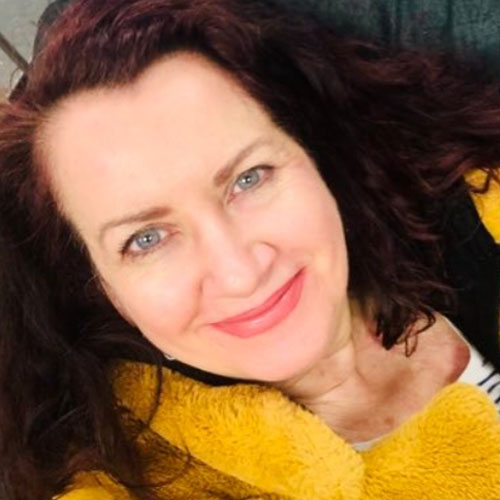
Jacqui Deevoy has been a full time freelance journalist for more than three decades. Over the last few years, she’s lost faith in the MSM and now prefers to work for news outlets that deal in truth, not lies.
In 2021, she launched a personal investigation into euthanasia in the NHS and this resulted in her producing the shocking documentary ‘A Good Death?’ She is currently crowdfunding for a second film – ‘Playing God’ – due for release soon.
She produces and presents the UNN Friday night show – a sometimes serious but often irreverent chat-fest with an array of fascinating guests talking on a wide range of subjects. She’s also one of UNN’s lead reporters.
Follow Jacqui on Twitter @JacquiDeevoy1
