
The United Kingdom is set to phase out the sales of the two most polluting fuels to help cut air pollution, the government says.
Owners of wood burners, stoves and open fires may be surprised to find out they will soon no longer be able to buy coal or wet wood to burn in them, under a ban to be rolled out from next year.
Bags of logs sold at DIY store, garden centres and petrol station apparently often contain wet wood, a type of wood which produces more pollution and smoke.
The government is urging the British public to move to “cleaner alternatives” to keep their fires going at home.
Plans for the ban were first announced 18 months ago, but the Department for Environment, Food and Rural Affairs has now confirmed the plans will be going ahead in England.
The government has claimed wood-burning stoves and coal fires are the largest source of fine particulate matter (PM2.5), small particles of air pollution which find their way into the body’s lungs and blood.
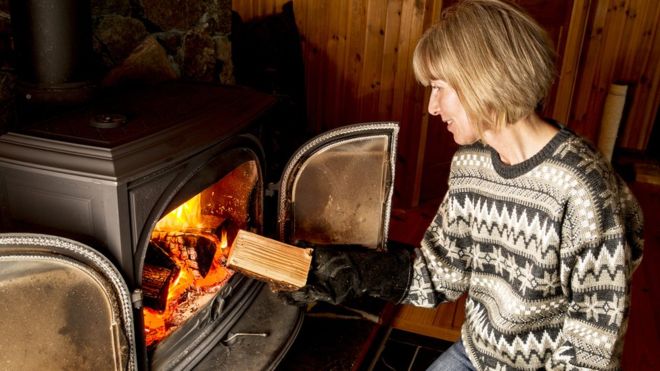
Environment Secretary George Eustice said: “Cosy open fires and wood-burning stoves are at the heart of many homes up and down the country,

“But the use of certain fuels means that they are also the biggest source of the most harmful pollutant that is affecting people in the UK.”
The shift in policy will mean that sales of bagged traditional house coal will be phased out by February 2021, and the sale of loose coal direct to customers will end by 2023.
Sales of wet wood in small units (less than 2m3) will be phased out from February 2021. Wet wood in volumes greater than 2m3 will also have to be sold with advice on how to dry it before burning.
Makers of solid fuels will also need to show they have a very low sulphur content and only emit a small amount of smoke.

The legislation does not ban wood or coal-burning stoves.
According to statistics cited by the BBC around 1.5 million homes use wood for fuel across the UK, however, burning wood and coal in open fires and stoves makes up 38% of the UK’s emissions of PM2.5.
By comparison, 16% comes from industrial combustion, 12% from road transport and 13% from the use of solvents and industrial processes.
Officials said the phase-out will give the public and suppliers time to use up stocks and move to cleaner alternatives, such as dry wood and manufactured solid fuels.
HM’s government has claimed these alternatives are cheaper, produce less smoke and pollution and are efficient to burn.


Editor-in-Chief | Carl D. Pearson has been involved in British politics and media from an early age, with the key knowledge of what it takes to run a news organisation for the 21st century. Mr Pearson, as Editor-in-chief, is responsible for supervising the daily tasks of publishing media and content to UNN’s website and various platforms.
[sibwp_form id=4]
