
We have been hearing a lot from the World Health Organisation (WHO) during the COVID-19 Pandemic – but what is it and what does it do exactly?
Lets find out.
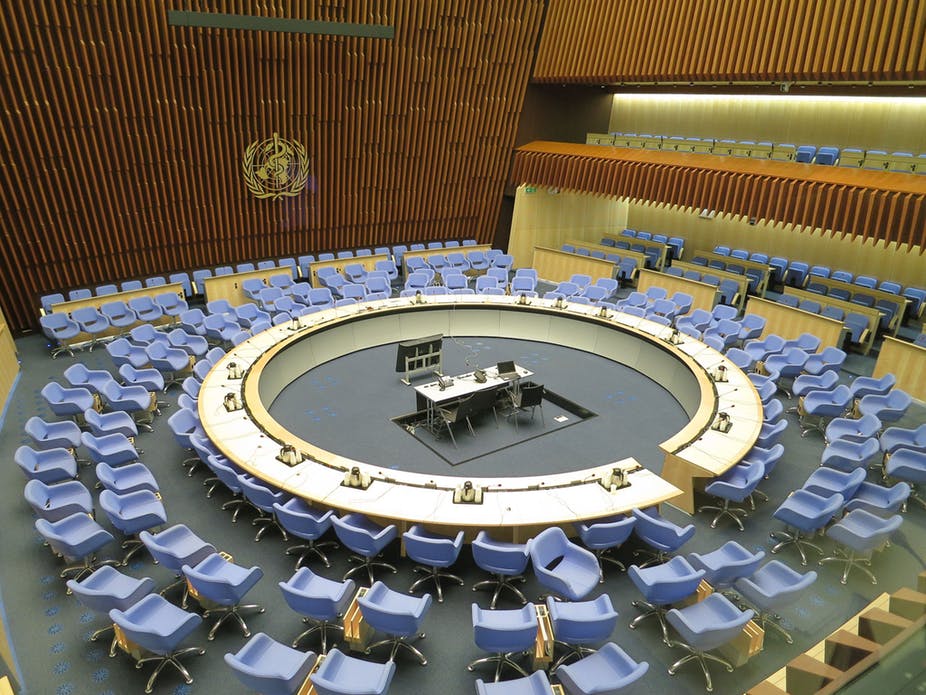
The World Health Organization (WHO) is a specialised agency of the United Nations concerned with world public health, established on 7 April 1948, with Headquarters in Geneva, Switzerland.
The current Director-General is Tedros Adhanom Ghebreyesus.
Tedros Adhanom Ghebreyesus is an Ethiopian politician and academic who has been Director-General of the WHO since 1 July 2017 and is currently serving a 5 year term.
He served in the Government of Ethiopia as Minister of Health from 2005 to 2012 and as Minister of Foreign Affairs from 2012 to 2016.

Tedros joined the Ministry of Health in 1986 as an internationally recognized malaria researcher. He received praise for a number of innovative and system-wide health reforms that substantially improved access to health services and key outcomes. Amongst them were hiring and training around 40,000 female health extension workers, cutting infant mortality from 123 deaths per 1,000 live births in 2006 to 88 in 2011, and increasing the hiring of health cadres including medical doctors and midwives.
In July 2009, he was elected Board Chair of The Global Fund to Fight AIDS, Tuberculosis and Maleria for a 2 year term.
Criticism and scandal
2009 Swine Flu Pandemic
In 2007, the WHO organized work on pandemic influenza vaccine development through clinical trials in collaboration with many experts and health officials. H1N1 influenza virus was declared by the then Director-General Margaret Chan in April 2009.
But the post-pandemic period critics claimed the WHO had exaggerated the danger, spreading “fear and confusion” rather than “immediate information”
Cholera – Haiti 2010
Cholera killed more than 10,000 Haitians since the disease was introduced by UN peacekeepers in 2010.
In January 2016, David Nabarro was appointed special adviser on the 2030 Agenda for Sustainable Development by General Ban Ki-moon.
One of his responsibilities was to lead the UN’s response to the cholera epidemic that its peacekeepers sparked in Haiti in October 2010 when…
“Untreated, infected sewage from a UN base was deposited in the country’s main river system. As of August 2016, at least 10,000 people had died and more than 800,000 had been sickened in the ongoing epidemic.”
UN Secretary General Ban Ki-Moon issued a long overdue apology for the UN’s “role” in the epidemic.
Ebola 2013–2015
In August 2014, David Nabarro was designated as special envoy of the UN Secretary-General on Ebola, with the responsibility for ensuring that the UN system makes an effective and coordinated contribution to the global effort to control the outbreak of Ebola.
The epidemic is believed to have begun in December 2013 with the death of a 2-year-old boy in a remote area of Guinea but was not recognized until March 2014.
For several months the epidemic was spreading. This is something that public health experts in the affected locations, such as Medecins Sans Frontières claimed was due to a deeply flawed and delayed response by health and government officials.
In an interview later in 2015, once Ebola had largely been brought under control, Nabarro said that when he started working on Ebola in 2014, he “was aware that we were in the middle of a disease outbreak of enormous proportions. The number of people getting sick was doubling every week.
Facilities were completely overloaded. Communities were in a state of despair….”He added that the international community had learned important lessons from the epidemic.
The world is going to be different as a result of this Ebola outbreak, much more confident, much more assured, and much, much more capable to ensure the well-being of its citizens.”
In May 2017, just prior to Tedros Adhanom Ghebreyesus’ election, stories surfaced about an alleged cover-up of 3 possible cholera epidemics in Ethiopia in 2006, 2009 and 2011.
The outbreaks were allegedly wrongly labelled as “Acute Watery Diarrhea” (AWD)—a symptom of cholera in an attempt to play down the significance of the epidemics UN officials said more aid and vaccines could have been delivered to Ethiopia if the outbreaks had been confirmed as cholera.
The allegations were made by Larry Gostin an American law professor, who was acting as an adviser to rival candidate David Nabarro from the UK. The African Union delegation to the UN dismissed the report, published in The New York Times, as “an unfounded and unverified defamation campaign, conveniently coming out only days before the election.

Tedros Adhanom denied the allegation of a cover-up and called it a “last-minute smear campaign”.
He was also criticised for exaggerated achievements in his CV.
“The health status of Ethiopia is poor, even when related to other low-income countries including those in sub-Saharan Africa.
The population suffers from a huge burden of potentially preventable diseases such as HIV, malaria, tuberculosis, intestinal parasites, acute respiratory infections and diarrhoea diseases.
Tedros Adhanom appointed Robert Mugabe as WHO Goodwill Ambassador
On 18 October 2017, Tedros Adhanom announced that he had chosen President Robert Mugabe of Zimbabwe to serve as a WHO Goodwill Ambassador to help tackle non-communicable diseases for Africa. He said Zimbabwe was a country that places universal health coverage and health promotion at the centre of its policies to provide health care for all.
Mugabe’s appointment was severely criticised with WHO member states and international organisations saying that Zimbabwe’s healthcare system had in fact gone backwards under his regime as well as pointing out Mugabe’s many human rights abuses.
Mugabe himself did not use his own country’s health system, instead travelling to Singapore for treatment. Observers said Tedros was returning a campaign favour. Mugabe was chair of the African Union when Tedros was endorsed as a sole African Union candidate in a murky process that didn’t consider qualified alternatives. His judgement was widely questioned on social media.
After widespread condemnation, on 22 October 2017 Tedros Adhanom rescinded Mugabe’s goodwill ambassador role.
https://en.wikipedia.org/wiki/Tedros_Adhanom
Analysis
The World Health Organisation appears to be mired in controversy and failure over many years and within many areas.
- Swine Flu – allegations of exaggerating the danger, spreading “fear and confusion” rather than “immediate information”
- Ebola – a deeply flawed and delayed response by health and government officials.
- Cholera epidemic sparked by UN peacekeepers depositing untreated infected sewage from a UN base into a main river system
- The current Director general surrounded by allegations of exaggerating his CV and covering up 3 cholera epidemics in Ethiopia during his tenure and courting controversy and widescale condemnation surrounding his appointment of Robert Mugabe as Goodwill Ambassador.
We are now reliant on this International Organisation to aid with the COVID-19 Pandemic.
So many mistakes but have lessons been learned – only time will tell!
UNN is a truly alternative news organisation delivering live shows, articles, outside broadcasts and so much more! We desperately need your support to continue each month and you can support our work by Clicking Here Now and SUBSCRIBING to show your support for Real News!


I wrote my first article for Unity News Network on 30th December 2019, and I have been writing ever since – my library is now well in excess of 200 articles.
Alternative media is essential in these times of unprecedented censorship and mainstream bias, which has ramped up exponentially during the past 2 years. The overton window of “acceptable opinion” is growing every narrower.
Having a citizen’s log, cataloguing the twists and turns of life during these turbulent times is essential.
Thank you Unity News Network for allowing me a voice on your platform.
