
Well, the first question has to be ‘why are they suicidal?’ Of course mainstream newspaper The Independent doesn’t really go into that.
Overworked and underpaid perhaps? Could it be the delayed stress of the ‘pandemic’? Maybe suicidal thoughts and feelings are a new side effect of ‘Long Covid’. Might it be down to the fact that they just don’t have the opportunity to throw together those crazy little dance routines any more. Perhaps it’s the upset of seeing so many often young and previously healthy people die in front of them in vast numbers (and being ‘baffled’ as to why of course). Maybe it’s guilt-related as they slowly come to terms with the fact they’ve been involved – wittingly or unwittingly – in protocols that are evil, immoral and unethical. Who really knows for certain?
But regardless of the reasons, if they want help, it looks like they’re not going to get it. The NHS workers are going to be – as many have predicted – well and truly thrown under the bus. And any mental health help they were getting us now about to be cruelly snatched away.
According to the paper: “Suicidal NHS staff will be left in “dangerous” situations without support when national funding for mental health hubs ends next month, health leaders have warned.
The hubs, set up with £15 million of government funding for NHS workers following Covid, are being forced to close or reduce services as neither the department for health and social care nor the NHS has confirmed ongoing funding for 2023-24.
This will leave thousands of NHS staff, some of whom are described as “suicidal” in “complete limbo”.

The British Psychological Society (BPS) and the Association of Clinical Psychologists said the failure to continue the funding was an “irresponsible” way to treat vulnerable health and care workers.
It comes after The Independent revealed that the number of sick days taken by NHS staff almost doubled in 2022 compared to before the pandemic, costing the NHS billions.
Professor Mike Wang, chair of ACP, said: “There is a clinical responsibility, not to remove a service from individuals who are vulnerable, and in difficulty… the problem with that is that the funding ceases at the end of March and that’s absolutely no time at all to make any [future] provision. So, it’s clinically irresponsible to simply halt a service. Some of these individuals are, you know, carrying suicide risk.”
He said it was “dangerous” and “astonishing” that funding for the hubs was ending “given the present circumstances of continuing effects of the pandemic, clear evidence of underfunding of health care in this country”.
Professor Tony Lavender, workforce and training lead for clinical psychology at BPS, said: “The timing of this couldn’t really be worse. It must be self-evident to people that the NHS is in difficulty. Just look at the difficulty retaining staff, recruiting staff, this kind of sickness levels, the general morale. It is almost unbelievable to withdraw a service that’s about improving and helping the well-being of staff for which there’s evidence for effectiveness.”
The BPS and ACP are calling for the government to commit to at least an additional year’s funding for the hubs so transitional arrangements can be made.
Jane Borland, a care home manager from Northamptonshire, who was referred to the hubs in 2021, said the news about the hubs ending had left her “angry”, adding “it is really devastating”.
She said that with waits of up to 18 months for mental health services, many colleagues were left thinking “what is the point? I need the help now not a year from now”.
Ms Borland, who worked during the pandemic, said: “We were left with no support at all… there were some scenes that we witnessed that you know, you never ever wanted to want to see again. I didn’t really appreciate what was going on, I don’t usually suffer with my mental health. Normally whatever life throws at me I deal with. I was very angry, really angry, quite tearful as we were sort of coming out from Covid I found myself really, really tense so I could see that I wasn’t coping very well… without [the hub] I don’t think I’d be here [at work].”
Data for 11 of the 40 mental health hubs shows that 2,800 staff currently being treated will be left with no services beyond March.
Most of these hubs have seen a significant increase in demand from October 2021 to 2022 with an average rise of 72 per cent.
One evaluation seen by The Independent, showed 52 per cent of healthcare workers referred said their mental health had definitely been affected by work.
At least 74 per cent were absent from work or considering taking sick leave, while 81 per cent said they would remain or return to work after receiving care.
According to BPS and ACP, “hub teams are desperately trying to identify alternative funding arrangements to secure the services’ future. Some hubs have been forced to wind up their services, with staff potentially facing redundancy or redeployment. One hub has already served redundancy notices to staff”.
One hub leader said that patients would be left in “complete limbo”, adding that “is no way to run a clinical service it’s just not responsible … people [the hub leads] are very disturbed by the situation”.
She explained that the staff referred to the hub would be left only with local mental health services, for which they faced “enormous waiting times”.
She said research and evidence suggest that healthcare workers required a very specific form of service, different to what is available on the NHS such as talking therapies. She added: “Staff stopped knowing that they need to rest, they need a break. It’s quite a worrying thing to encounter and It’s widespread. It has an enormous impact staff’s ability to look after patients with empathy and this is terrible for staff as well as patients.”
An NHS spokesperson said: “The staff mental health and wellbeing hubs were set up in October 2020 in response to the pandemic, using additional non-recurrent funding until the end of this year. A final decision is yet to be made on the funding of these hubs for 2023/24.”

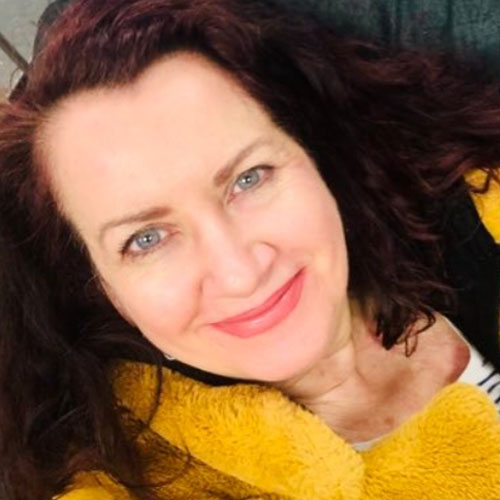
Jacqui Deevoy has been a full time freelance journalist for more than three decades. Over the last few years, she’s lost faith in the MSM and now prefers to work for news outlets that deal in truth, not lies.
In 2021, she launched a personal investigation into euthanasia in the NHS and this resulted in her producing the shocking documentary ‘A Good Death?’ She is currently crowdfunding for a second film – ‘Playing God’ – due for release soon.
She produces and presents the UNN Friday night show – a sometimes serious but often irreverent chat-fest with an array of fascinating guests talking on a wide range of subjects. She’s also one of UNN’s lead reporters.
Follow Jacqui on Twitter @JacquiDeevoy1
