
The terror suspect accused of killing three people in a Reading park had been investigated by MI5 before and has been on a watch list.
Khairi Saadallah, 25, was put on the security service’s ‘radar’ less than a year before Saturday’s attack after a tip-off that he planned to travel to his native Libya where it was feared he wanted to join a militant jihadist group.
Despite this, the file was closed after two months when intelligence services found no credible evidence to support the claim.
Members of the public have questioned if Saadallah should have been in the streets after being released early from prison this month for minor, non-terrorist offences.
It has also emerged that Saadallah had ‘serious mental health problems,’ had come to the UK as an illegal immigrant in 2012 but was granted asylum in 2018.
He had boasted to friends in the UK that he had fought as a child soldier to overthrow Colonel Muammar Gaddafi.
Saadallah first lived in Manchester when he arrived in the UK and former neighbours in Reading suggested he moved in the same circles as Salman Abedi, the convicted terrorist who carried out the Manchester attack, when he lived in the north-west.

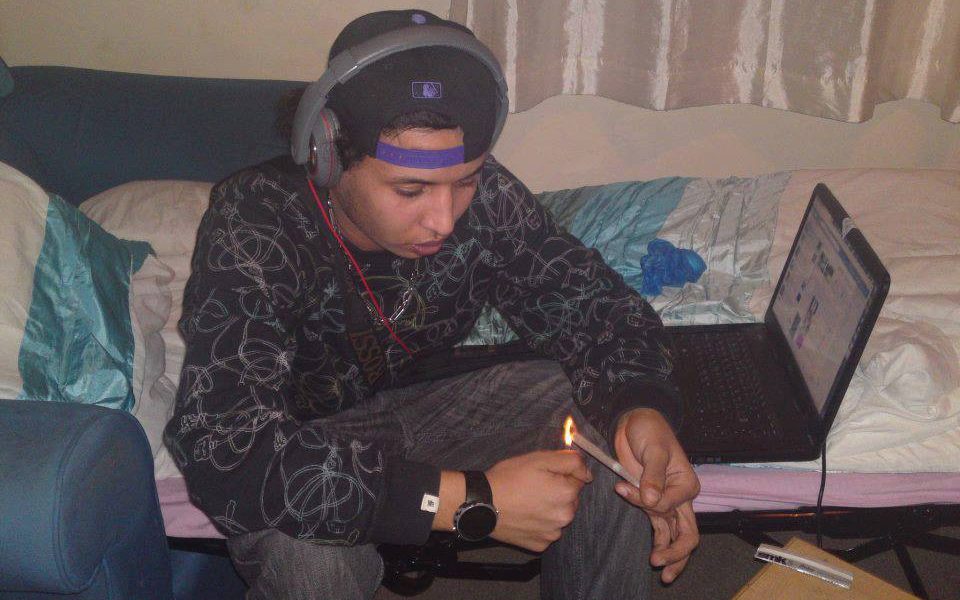
Home Office sources have so far denied any evidence of a connection.
Whitehall sources said Saadallah came ‘fleetingly’ on MI5’s radar over ‘information suggesting he had travel aspirations’.
The source told the Telegraph: “After a couple of months, we were confident there was nothing in the original information,
“It didn’t pass the threshold to merit a full investigation because the information was not credible enough.”
Saadallah remained in custody on Sunday night after being arrested on suspicion of murder allegedly fleeing the scene. He was later rearrested under Section 41 of the Terrorism Act 2000 giving officers a maximum of 28 days to charge him.
Counter-terror officers said the investigation “continues to move at a fast pace.”
John Campbell, Chief Constable of Thames Valley Police, said: “I am sure we would all want to recognise the bravery of those police officers responding, but also that a number of members of the public were helping my officer’s and the victims at what was a very distressing scene.”
Metropolitan Police Assistant Commissioner Neil Basu, the head of counter terrorism policing, said yesterday: “Please continue with your daily lives, but be alert, not alarmed, when you are out in public. If you see anything suspicious, anything at all that makes you feel suspicious, then please report it, please remain vigilant.”
Saadallah was relocated to the UK from war-torn Libya in 2012 because he could not bear the violence, his family claimed on Sunday. He claimed asylum on arrival.
Despite this, those who knew him in Manchester and Reading described an ‘unpredictable character’ who smoked cannabis, a habit which friends believed affected his personality.
A cousin of Saadallah claimed he had ‘mental health problems which caused him to hear voices and fear he was being followed,’ they also claimed he had converted to Christianity and even got a tattoo of a cross on his arm when he moved to the United Kingdom. “He’s not Muslim anymore,” she said. “It’s like he’s always been in the UK.”
Whitehall sources said it was not yet clear what his ideological motive was for the attack, but counter-terror police are now leading the investigation, amid concern that the attack may have been Islamist inspired.
[give_form id=”1772″ show_title=”false” show_goal=”false” show_content=”below” display_style=”modal”]

Editor-in-Chief | Carl D. Pearson has been involved in British politics and media from an early age, with the key knowledge of what it takes to run a news organisation for the 21st century. Mr Pearson, as Editor-in-chief, is responsible for supervising the daily tasks of publishing media and content to UNN’s website and various platforms.
[sibwp_form id=4]
